
Flow by Flow: Understanding each phase of the Menstrual Cycle
Written by Chloe Oyebola, QWHA Academic Coordinator
“I’m on my period.”
“I’m PMS-ing.”
“I’m ovulating right now.”
I’m sure you’ve probably heard one, if not all, of these phrases from friends, family, online comment sections, or you’ve even uttered one or two yourself. But what exactly is ovulation? Or PMS? And how does that relate to periods?
If you have these questions, you are not alone. According to the World Health Organization (WHO), only 2 out of 5 schools—39%—provide menstrual health education worldwide (1).
To address this common lack of education, we will discuss the menstrual cycle so you can become better informed about what’s happening in your body, stage by stage!
PMS: What Is It?
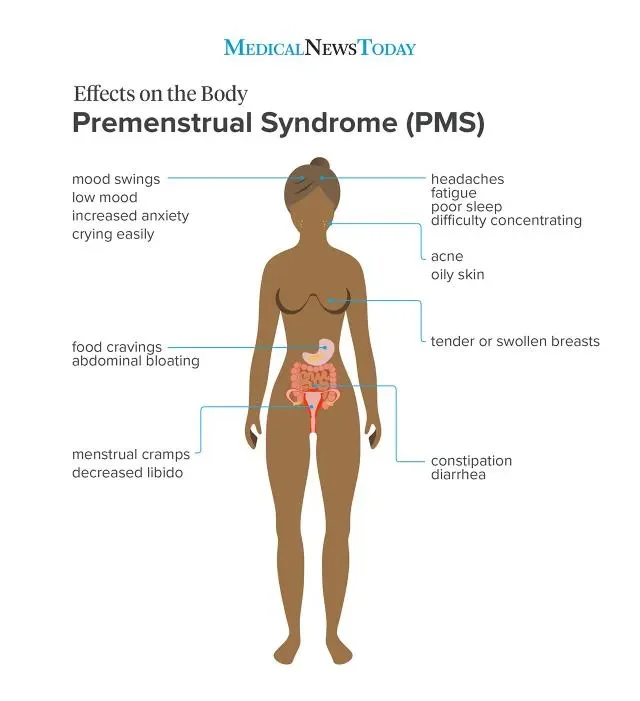
Image credit: Stephen Kelly, 2019.
PMS stands for Premenstrual Syndrome, and is an official medical condition that affects people who experience menstrual cycles. PMS occurs during the luteal phase of the menstrual cycle, the last stage before menstruation begins in a new cycle (2).
Culturally, there are a lot of typically unfavourable stereotypes attached to PMS, indicating that women become wildly emotional or irritable before menstruation. This rhetoric can be seen in media, pop culture, and even general day-to-day conversations. However, these stereotypes are quite generalizing, as PMS does not only consist of mood-based symptoms such as irritability or sadness, but also physical symptoms such as cramping, weight gain, and constipation (2). Additionally, according to the Canadian Institute of Health Research (CIHR), studies such as the Mood in Daily Life (MiDL) study have been showcasing that women’s moods and behaviours are far more likely to be influenced by psychosocial factors than PMS itself, and that culturally held beliefs surrounding PMS has been believed to affect both women’s and researchers’ expectations of the premenstrual stage (3). More research is needed to determine whether there’s a link between the biological basis of the menstrual cycle and the mood aspects of PMS; however, the physical symptoms have a pathophysiological basis and are driven by hormonal changes.
With up to three in four menstruating individuals experiencing some form of PMS, it remains an everyday and significant reality worth understanding (4).
The Menses Phase
The first phase of the menstrual cycle is known as the menses phase, and occurs on the first day of menstruation, or your period. In the menstrual phase, the uterus’s lining, which thickens in preparation for the implantation of an egg (pregnancy), is shed through the vagina by bleeding if implantation doesn’t occur. The average length of the menses phase is three to seven days. (5)
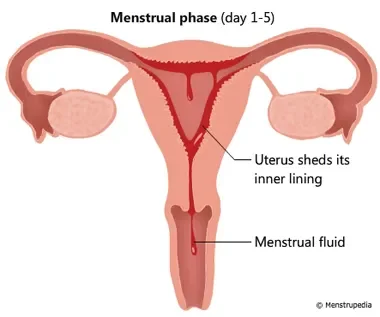
Image credit: Menstrupedia, 2025.
The Follicular Phase
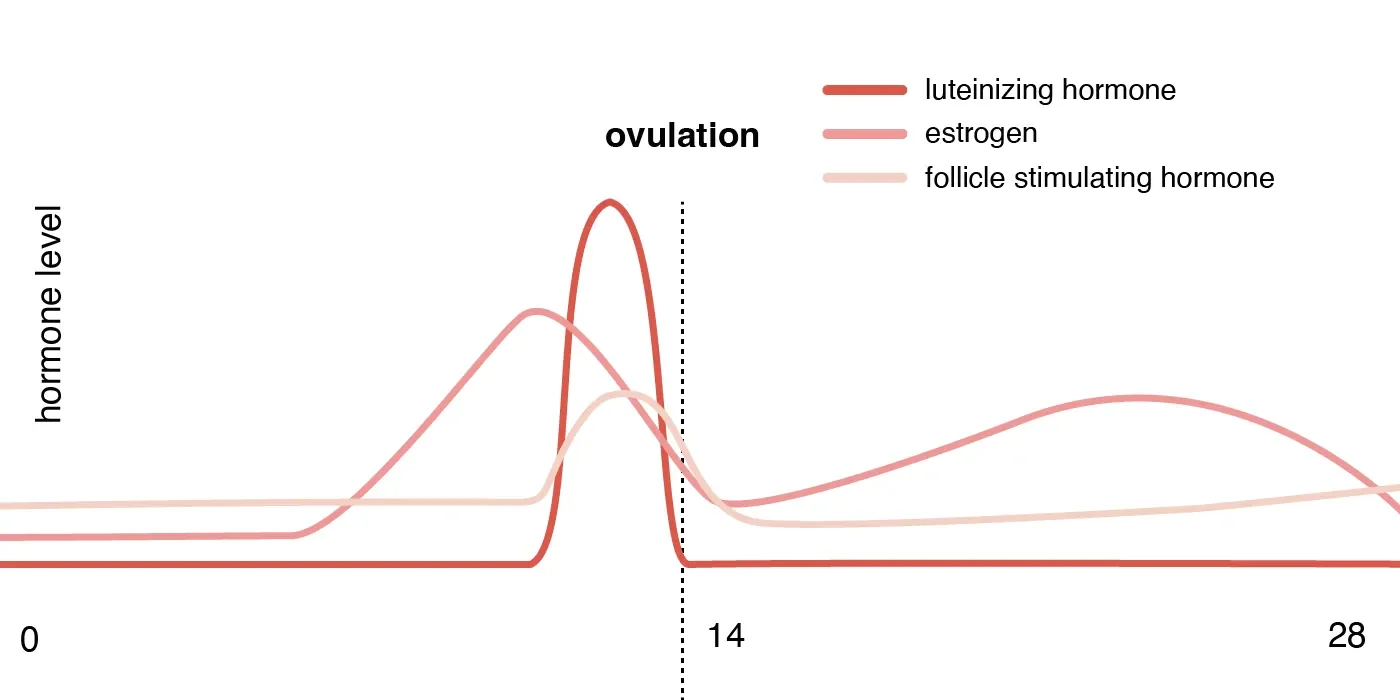
Image credit: Daysy, 2025.
The second phase of the menstrual cycle is the follicular phase. The follicular phase is unique, and many things fluctuate during this stage. It overlaps with the menses phase, beginning on the day of menstruation, and ends before ovulation, the next stage of the menstrual cycle. Key changes that occur during the follicular phase are the increase of estrogen, which causes the uterus lining to thicken, and follicle-stimulating hormone (FSH), which causes follicles in the ovaries to grow.(5)
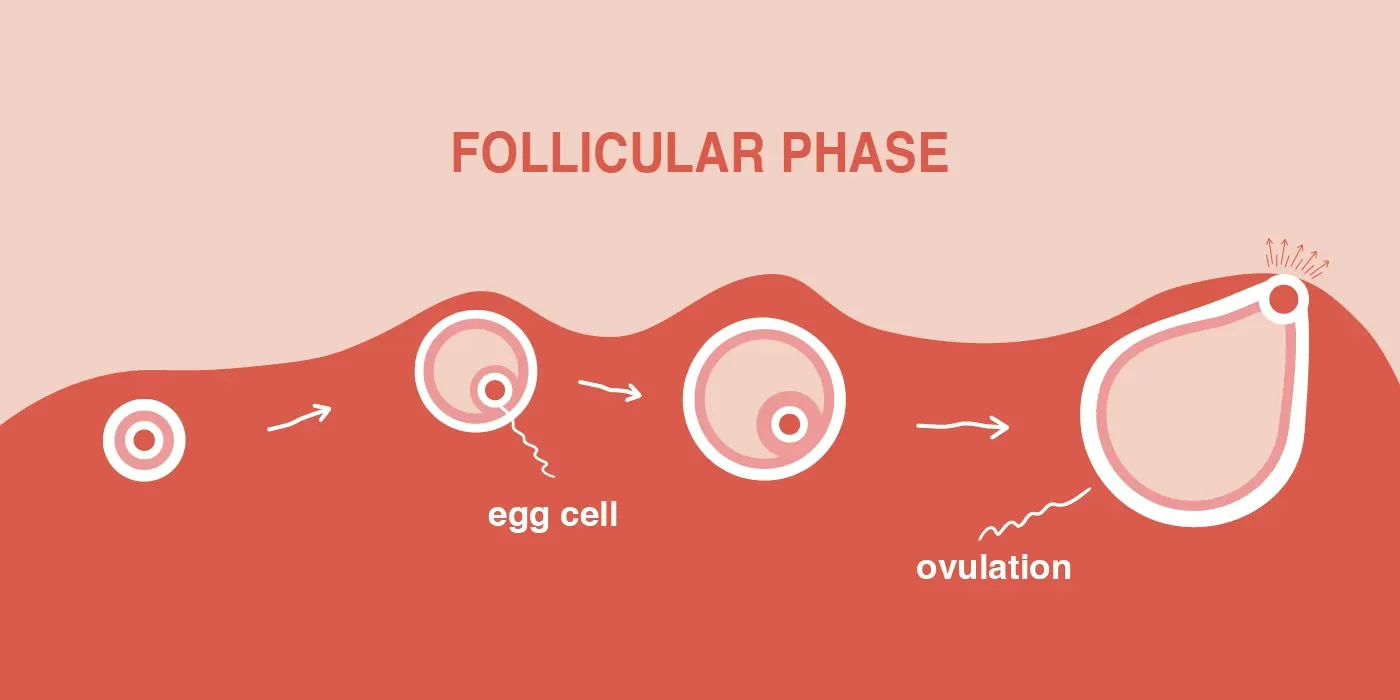
Image credit: Daysy, 2025.
The follicular phase ends during days 10 to 14 of the menstrual cycle, and its ending is marked by one of the developing follicles stimulated by FSH growing into a fully mature egg, called an ovum (5).
Ovulation
At the halfway point of the menstrual cycle, ovulation occurs due to an increase in the luteinizing hormone (LH). This increase in LH causes the ovary to release the fully mature egg produced during the follicular phase (5). The released egg travels through the fallopian tube and waits to be fertilized by sperm.
Image credit: The Fertility Academy, 2025.
Many people who want to become pregnant track their menstrual cycles to predict when ovulation will occur, since that is when conception is most likely (6).
Some symptoms commonly associated with ovulation are increased sex drive, tender breasts, and bloating (6).
The Luteal Phase
The last phase of the menstrual cycle is the luteal phase. If the egg in the fallopian tube is fertilized, the level of progesterone, a hormone, increases to prepare the uterine lining for pregnancy (5). The fertilized egg is then attached to the uterine wall, implanting itself, and the process of pregnancy begins (5). If the egg in the fallopian tube isn’t fertilized, both estrogen and progesterone levels decrease, and the lining of the uterus sheds, returning the cycle to the first stage: the menses phase.
How Long is a “Normal” Menstrual Cycle?
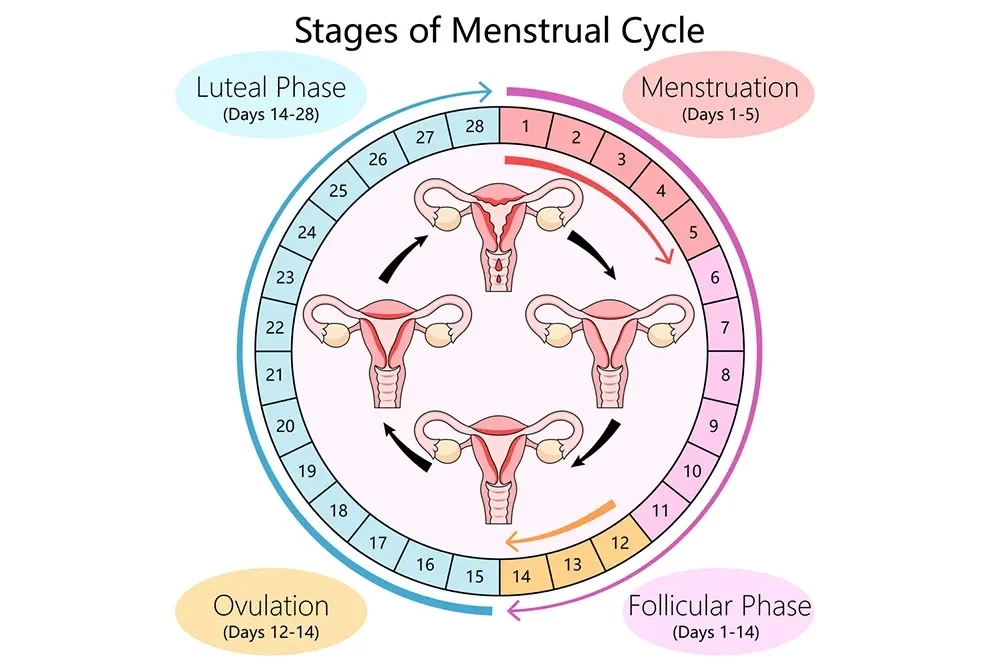
Image credit: Rosh MFM, 2025.
As you may know, not everyone’s menstrual cycle is the same. The average length of a menstrual cycle is 28 days long (5). Realistically, the cycle ranges from 21 days to 35 days between one period and the next.
Irregular periods and irregular presentations can occur (5). Examples of this include excessively heavy or light menstrual flow, period bleeding lasting for more than seven days, and menstrual cycles occurring more than 35 days apart (5).
In Conclusion…
Knowing the mechanisms behind common phrases like “I’m ovulating right now” or “I’m PMS-ing” provides a greater level of confidence and agency regarding personal health. By diving deep into the menstrual cycle and fostering open dialogue, QWHA hopes to help ensure that comprehensive menstrual health education is universally accessible to all who have periods.
References
World Health Organization: WHO. Global report reveals major gaps in menstrual health and hygiene in schools. World Health Organization. https://www.who.int/news/item/28-05-2024-global-report-reveals-major-gaps-in-menstrual-health-and-hygiene-in-schools. Published May 28, 2024.
Gudipally PR, Sharma GK. Premenstrual Syndrome. StatPearls - NCBI Bookshelf. Published July 17, 2023. https://www.ncbi.nlm.nih.gov/books/NBK560698/
Government of Canada, Canadian Institutes of Health Research, External Affairs and Business Development. Does PMS exist? CIHR. Published January 5, 2015. https://www.cihr-irsc.gc.ca/e/48939.html
Premenstrual syndrome (PMS) - Symptoms & causes - Mayo Clinic. Mayo Clinic. Published February 25, 2022. https://www.mayoclinic.org/diseases-conditions/premenstrual-syndrome/symptoms-causes/syc-20376780
Professional CCM. Menstrual Cycle. Cleveland Clinic. Published September 11, 2025. https://my.clevelandclinic.org/health/articles/10132-menstrual-cycle
Professional CCM. Ovulation. Cleveland Clinic. Published March 31, 2025. https://my.clevelandclinic.org/health/articles/23439-ovulation
Eske J. What to know about premenstrual syndrome (PMS). Published June 14, 2023. https://www.medicalnewstoday.com/articles/325314#symptoms
Sites S. Everything You Need To Know About The Menstrual Cycle Phases - Rosh Maternal & Fetal Medicine OBGYN. Rosh Maternal & Fetal Medicine OBGYN. Published May 12, 2025. https://roshmfm.com/everything-you-need-to-know-about-the-menstrual-cycle-phases/
Aryan. Are periods related to fertility? How your period affects your chances of getting pregnant. The Fertility & Gynaecology Academy. Published March 28, 2024. https://www.fertility-academy.co.uk/blog/are-periods-related-to-fertility/
Fulton A. Clinically Speaking: Questions to ask your healthcare provider about periods. HealthyWomen. https://www.healthywomen.org/created-with-support/questions-ask-about-periods. Published July 15, 2021.
