
When Trauma Lives in the Body
Understanding the Link Between Psychological Trauma and Chronic Pain in Women
Written by Isabella Terentiew, QWHA Academic Director
Introduction
Chronic pain in women extends beyond a physical sensation and constitutes a complex experience influenced by biological, psychological, and social factors. Research consistently demonstrates that women are more frequently affected by various chronic pain conditions than men, including fibromyalgia, migraine, temporomandibular pain, and osteoarthritis(1). According to the International Association for the Study of Pain (IASP), chronic pain and many painful conditions tend to be more common in women than men throughout the lifespan, underscoring the need to examine pain from a women’s health perspective and implement trauma-informed care(1).
Women also exhibit distinct patterns of psychological trauma and trauma-related symptoms. While trauma can affect individuals of any gender, women have a higher risk of developing post-traumatic stress disorder following traumatic events(2). Research indicates that both biological and psychosocial factors contribute to this disparity(2). Additionally, women are disproportionately exposed to specific forms of trauma, such as sexual violence, which may influence the processing of stress, emotion, and bodily sensations over time(2).
Chronic pain and psychological trauma are interrelated phenomena. In some individuals, trauma-related processes such as hyperarousal, increased vigilance to bodily threat, fear, avoidance, and pain catastrophizing may interact with persistent pain(3). Theoretical models of chronic pain and post-traumatic stress disorder suggest that these processes can reinforce one another, with pain potentially exacerbating trauma-related distress and trauma symptoms influencing pain perception and management(3). While trauma does not account for all chronic pain, this pathway is particularly relevant for understanding women’s health and the implementation of trauma-informed care(3).
What is Chronic Pain?
Chronic pain is defined as pain that persists or recurs for more than three months(4). In contrast to acute pain, which typically serves as a short-term warning signal following injury or illness, chronic pain may persist after the original injury has healed or when the underlying condition remains unresolved(4). The International Association for the Study of Pain (IASP) highlights that chronic pain is multifactorial, with biological, psychological, and social factors all contributing to its development and persistence(4).
Chronic pain manifests in various forms, including chronic musculoskeletal pain, migraine and other headache disorders, neuropathic pain, chronic pelvic or abdominal pain, and widespread pain conditions such as fibromyalgia(4). Beyond physical symptoms, persistent pain can disrupt sleep, mood, physical activity, interpersonal relationships, occupational or academic performance, and overall participation in daily life(4).
Why Talk about Trauma in Women?
Psychological trauma may arise from experiences such as sexual violence, intimate partner violence, childhood abuse, or other events that exceed an individual’s coping capacity. While trauma can affect individuals of any gender, the nature of traumatic experiences frequently differs by gender. In Canada, women are significantly more likely than men to experience sexual assault and intimate-partner sexual violence(5). For instance, in 2025, the past-year prevalence of sexual assault was 3.2% among women compared to 1.1% among men(5).
Women are at greater risk of developing post-traumatic stress disorder (PTSD) following traumatic experiences. Recent reviews estimate that women have approximately a two- to threefold higher risk of PTSD than men(2). The underlying causes are complex and likely involve interactions among biological, psychological, social, and trauma-related factors(2). Not all individuals who experience trauma develop PTSD. Trauma is also associated with a broader range of responses, such as hypervigilance, avoidance, emotional distress, sleep disturbances, and increased sensitivity to perceived threats(2).
This intersecting relationship is particularly relevant in the context of chronic pain amongst women. Recent literature indicates that histories of psychological trauma and adverse experiences are associated with chronic pain and poorer pain-related outcomes, although these associations vary among individual differences(6). A 2024 systematic review and meta-analysis focusing on violence against women found that women with histories of violence had approximately twice the odds of chronic pain compared to women without such histories(6). However, this association does not imply that trauma inevitably causes chronic pain; instead, trauma may be one of several factors influencing vulnerability to persistent pain(6).
How Can Trauma and Pain Reinforce Each Other?
Trauma-related symptoms and chronic pain frequently interact in a self-reinforcing cycle(7,8). Psychological trauma can be associated with hyperarousal and heightened vigilance toward potential threats or uncomfortable bodily sensations(7,8). As a result, pain is more likely to be interpreted as threatening, which increases fear, catastrophizing, and avoidance behaviours(7,8). Prolonged avoidance of movement, activities, or trauma reminders reduces opportunities for recovery and contributes to increased distress and disability(7,8). Additionally, the experience of pain may serve as a reminder of previous trauma, further elevating arousal and attention to pain(7,8).
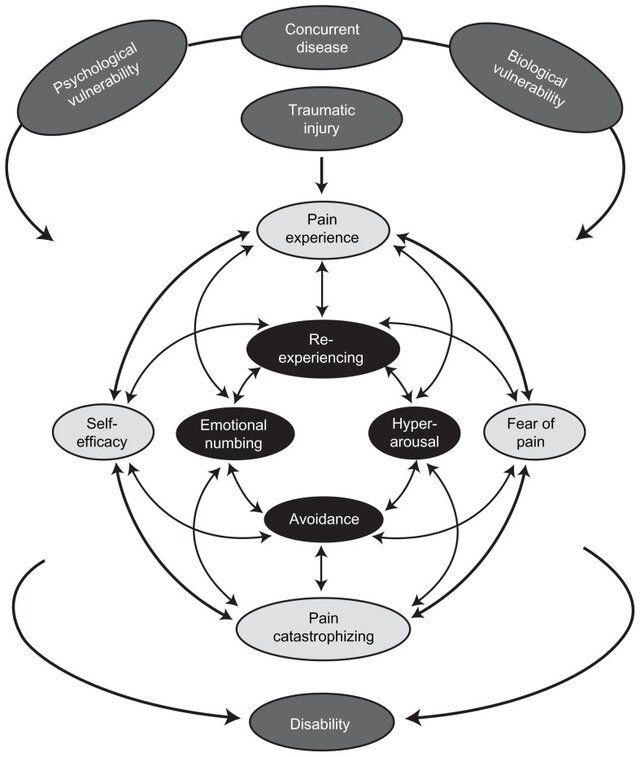
Figure 1. Psychological trauma may interact with pain through processes such as hyperarousal, fear, avoidance, and catastrophizing, helping explain why chronic pain and trauma-related symptoms can overlap in some women(7).
Why Does This Matter for Women’s Healthcare?
Understanding the relationship between trauma and chronic pain enables healthcare providers to adopt a more trauma-informed and individualized approach to women's care(9). Trauma-informed care does not presume that pain is psychological or require women to disclose traumatic experiences. Rather, it prioritizes safety, trust, sensitivity, collaboration, and acknowledges that previous trauma may affect how patients experience healthcare and manage symptoms(9). Studies investigating women's experiences with trauma-informed care underscore the significance of provider sensitivity, rapport, patient comfort, and tailored treatment(9).
For women with chronic pain, this approach encourages clinicians to consider physical, psychological, and social factors collectively, rather than addressing each symptom in isolation(10).
Conclusion
Chronic pain and psychological trauma are integrated experiences that cannot be attributed to a single cause within women's health(6,8). In certain cases, trauma-related processes such as hyperarousal, fear, avoidance, and catastrophizing may interact with persistent pain, influencing daily functioning and quality of life for women(6,8).
Understanding how psychological trauma and chronic pain interact allows for a more complex perspective that goes beyond viewing physical and emotional pain in isolation(8). By appreciating the dynamic relationship between the brain, body, personal histories, and environment, we can better support the movement toward compassionate, holistic, and trauma-informed healthcare tailored to women(6,8).
References
Blyth F, Parker RE, Strath L, Wesselmann U. Gender differences in chronic pain conditions. International Association for the Study of Pain. Published June 28, 2024. Accessed September 27, 2026. https://www.iasp-pain.org/resources/fact-sheets/gender-differences-in-chronic-pain-conditions/
Haering S, Meyer C, Knaevelsrud C, Engel S. Sex and gender differences in posttraumatic stress disorder: current evidence on etiology, trajectory and treatment. Nervenarzt. 2026;97(1):34-41. doi:10.1007/s00115-025-01907-6.
Friedman JK, Taylor BC, Hagel Campbell E, et al. Gender differences in PTSD severity and pain outcomes: baseline results from the LAMP trial. PLoS One. 2024;19(5):e0293437. doi:10.1371/journal.pone.0293437.
International Association for the Study of Pain. Definitions of chronic pain syndromes. Accessed September 27, 2026.https://www.iasp-pain.org/advocacy/definitions-of-chronic-pain-syndromes
Cotter A, Burczycka M. Gender differences in experiences of violence and unwanted sexual behaviour in Canada, 2025. Statistics Canada. Published March 31, 2026. Accessed September 27, 2026.https://www150.statcan.gc.ca/n1/pub/85-002-x/2026001/article/00004-eng.htm
Uvelli A, Ribaudo C, Gualtieri G, Coluccia A, Ferretti F. The association between violence against women and chronic pain: a systematic review and meta-analysis. BMC Womens Health. 2024;24(1):321. doi:10.1186/s12905-024-03097-w.
Rosenbloom BN, Khan S, McCartney C, Katz J. Systematic review of persistent pain and psychological outcomes following traumatic musculoskeletal injury. J Pain Res. 2013;6:39-51. doi:10.2147/JPR.S38878.
Bosco MA, Gallinati JL, Clark ME. Conceptualizing and treating comorbid chronic pain and PTSD. Pain Res Treat. 2013;2013:174728. doi:10.1155/2013/174728.
Liu VC, Nelson LE, Shorey S. Experiences of women receiving trauma-informed care: a qualitative systematic review. Trauma Violence Abuse. 2024;25(4):3054-3065. doi:10.1177/15248380241234346.
Lamvu G, Carrillo J, Ouyang C, Rapkin A. Chronic pelvic pain in women: a review. JAMA. 2021;325(23):2381-2391. doi:10.1001/jama.2021.2631.
